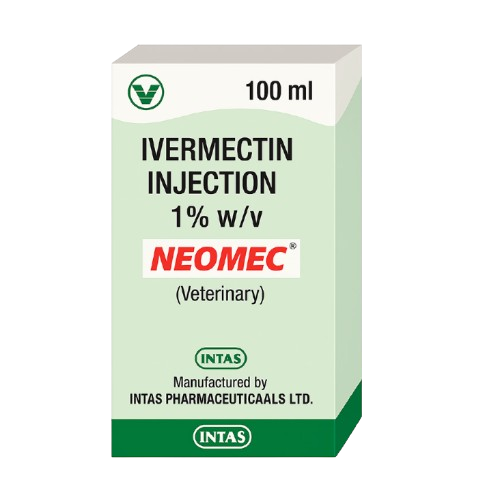
Ivermectin works by selectively binding with high affinity to glutamate-gated chloride ion channels present in the nerve and muscle cells of invertebrates (parasites). This binding leads to an increased permeability of the cell membrane to chloride ions. The resulting hyperpolarization of the nerve cell or paralysis of the muscle cell blocks signal transmission. This causes flaccid paralysis and eventual death of the parasites. The mechanism is highly selective, as mammals do not possess these glutamate-gated channels in their peripheral nervous system.