Gamma Benzene Hexachloride 0.1% w/w
Proflavine Hemisulphate 0.1% w/w
Cetrimide 0.45% w/w
Eucalyptus oil, Turpentine oil and Neem oil as a base

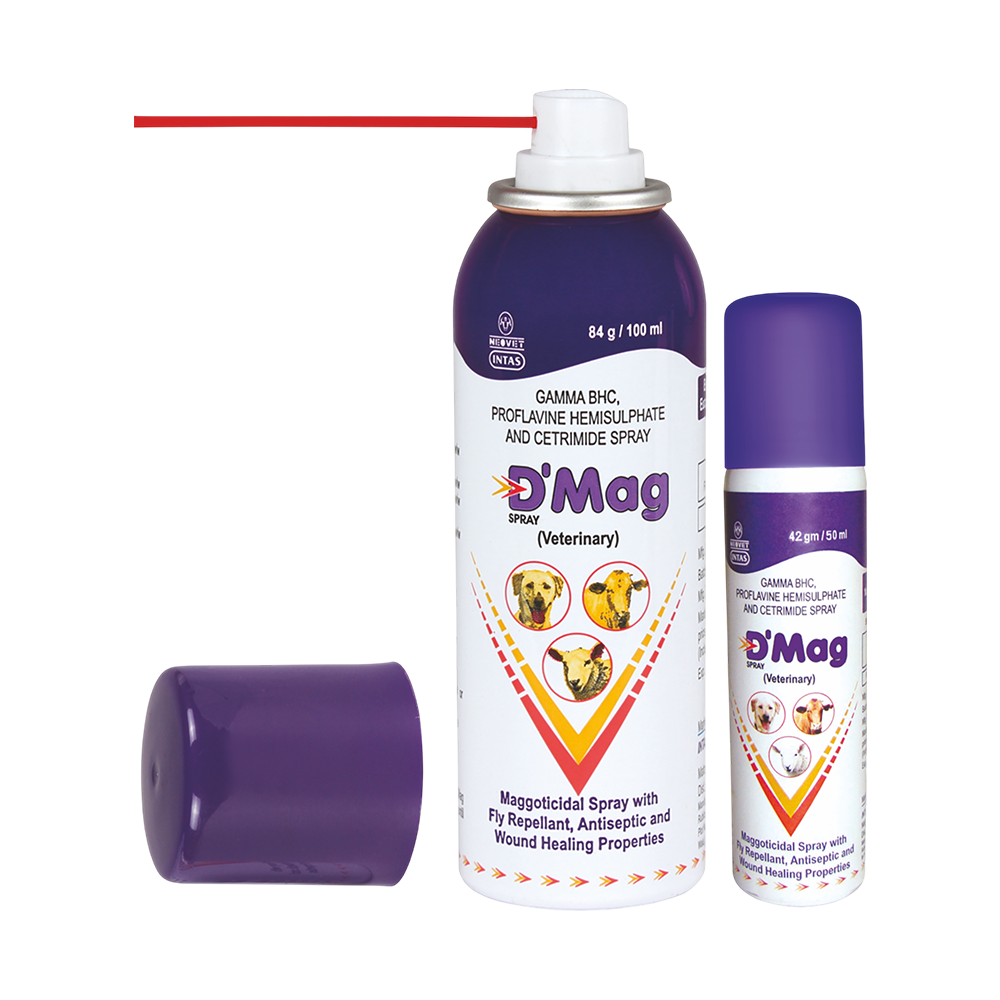
D’MAG
Anti-Maggot and Antiseptic Wound Spray
Fast Action. Fly-Free Healing.
Composition
Indications
Treatment of myiasis (magot-infested wounds) in livestock.
Control and prevention of fly strike in susceptible animals.
Management of septic wounds, ulcers, and abrasions.
Effective against Tinea, Ringworm, and other superficial infections.
A prophylactic treatment for surgical wounds, docking, or castration sites.
Mechanism of Action
The primary maggoticidal action comes from Gamma Benzene Hexachloride (), which is a neurotoxin. It acts on the central nervous system of insects by interfering with the gamma-aminobutyric acid (GABA)-gated chloride channels. This causes an increase in nerve activity, leading to sustained excitation, convulsions, and rapid death of the maggots. Proflavine and Cetrimide provide broad-spectrum antiseptic activity, inhibiting bacterial growth and supporting wound healing.
Benefits
Powerful maggoticidal action ensures rapid clearance of larvae.
Dual antiseptics promote a clean healing environment.
Natural oils (Neem, Eucalyptus) serve as effective fly repellents.
Easy application via aerosol minimizes animal handling and contamination.
Aids in granulation and faster wound healing time.
Usage & Recommendation
Infested Wounds: Clean the wound of debris. Spray liberally to cover the entire affected area until the wound is colored.
Ensure deep penetration into tunnels/pockets of the wound.
Prophylaxis
Spray once daily on surgical or open wounds for several days.
Repeat application as necessary or as directed by a veterinarian.
Presentation
Pressurized Aluminum Aerosol Can (50 ml & 100 ml)
Dosage
Aerosol Spray
×
Asia

×
America

×
Middle East

×
Africa

×
Anz

×
south America

×
EU

×
India

